


Compression


Thread Starter
Senior Member


Music City Scions
SL Member
Joined: Mar 2009
Posts: 1,372
From: Nashville, TN
 Compression
I was thinking what determines what the compression pressure should be on an engine. Example what should a gas motor be at low compression vs high compression and diesel. Just curious.
Sent from my SGH-T999 using Tapatalk 2
Sent from my SGH-T999 using Tapatalk 2
Last edited by BlackKnight; Oct 16, 2012 at 12:29 AM.

Senior Member
SL Member
Joined: Jul 2010
Posts: 2,230
From: 608
Piston to Valve clearance while taking the volume of the combustion camber with fuel and spark into effect. As far as diesel to gas... diesel has a much higher compression. But also, I'm not exactly sure what it is that you are pondering. Re-read your post and reiterate.
Thread Starter
Senior Member
Music City Scions
SL Member
Joined: Mar 2009
Posts: 1,372
From: Nashville, TN
I understand how to calculate compression ratio. I am trying to understand how do you determine what the compression pressure should be in each cylinder once modified, ie the repair manual will tell you if you run a compression test it should have 180-220. This is only an example. If you modify an engine how can you tell what the correct pressures should be.
Sent from my SGH-T999 using Tapatalk 2
Sent from my SGH-T999 using Tapatalk 2
Senior Member
SL Member
Joined: Jul 2010
Posts: 2,230
From: 608
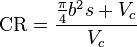
Street nerds without an engine shop base their compression off of what they know. That is, whatever they are changing in the engine, they know beforehand if that should raise the compression or lower it due to specs of the new internals. You can get really high compression pistions, or you can get really low compression rods. Or same goes for the head with the valves. So if prior to your build, if you were pushing 200 PSI, and then you dump some high compression internals in there, then you should be looking at the 210-220 PSI range. But you can also lower your compression, and again, that is determined prior to installing it, because you would know the specs and what to expect from the modification. So anyways, if you raise your compression with the stock block you were using, expect to raise from anywhere around 9:1 at 190 PSI to possibly 11:1 at 220-225 PSI. So where does diesel come into play with this?
Thread Starter
Senior Member
Music City Scions
SL Member
Joined: Mar 2009
Posts: 1,372
From: Nashville, TN
You misunderstanding I know how to calculate compression ratio, thats not what im asking. How do you calculate what combustion pressure should be with a compression tester?
Sent from my SGH-T999 using Tapatalk 2
Sent from my SGH-T999 using Tapatalk 2

Senior Member


SL Member
Team ScioNRG
Joined: Mar 2005
Posts: 5,920
From: Staten Island, NY
For modern cars, compression should be within 120lbs and 180lbs (most will fall between 140 and 160lbs.), with each cylinder being no more than 15% different from any other.
Senior Member
SL Member
Joined: Jul 2010
Posts: 2,230
From: 608
quietthings, that didn't answer his question.
black knight, you are a very reputable guy on here so i don't mean to give you a hard time, but if your first post just said that, then you'd have your answer from me on my first post.
if you know your ratio, your psi is going to be about 15 to 20 times your ratio. 10:1 ratio will be 10 times "15-20" to get around 150 to 200 psi. they say its exactly 14.7 times your ratio, but no body buys that. that equates to a very low psi reading. my 1990 civic 1.6L race car is pushing 220psi per cylinder, and there is no way my ratio is 220 divided by 14.7= 15:1. same goes for diesel too, it's about 15-20 times your ratio, no difference there.
black knight, you are a very reputable guy on here so i don't mean to give you a hard time, but if your first post just said that, then you'd have your answer from me on my first post.
if you know your ratio, your psi is going to be about 15 to 20 times your ratio. 10:1 ratio will be 10 times "15-20" to get around 150 to 200 psi. they say its exactly 14.7 times your ratio, but no body buys that. that equates to a very low psi reading. my 1990 civic 1.6L race car is pushing 220psi per cylinder, and there is no way my ratio is 220 divided by 14.7= 15:1. same goes for diesel too, it's about 15-20 times your ratio, no difference there.

Senior Member
SL Member
Joined: Feb 2006
Posts: 1,971
From: Tiverton, RI
14.7 times sounds about right because if it is a true ratio then it's the law of compressed atmospheric gasses, usually the compression gauge will show the ratio. Remember the gauge is going to affect the final volume due to the fitting that screws into the spark plug hole and the hose going to the gauge has volume that adds to the compressed air final volume along with the combustion chamber. You also get some ring leakage as well as maybe some valve leakage that will lower the pressure.

Thread
Thread Starter
Forum
Replies
Last Post
BlingSlade
Scion iA Discussion Lounge
6
Oct 19, 2016 12:39 AM
Hydryman
Scion tC 1G Owners Lounge
9
Feb 23, 2016 03:35 PM
Subaru86
Scion FR-S Suspension & Handling
0
Jul 31, 2015 04:33 AM
