


Jim Press, Toyota COO, Interview


Thread Starter
Founder


SL Member
Joined: Apr 2003
Posts: 4,281
From: scionlife.com
 Jim Press, Toyota COO, Interview
The Quiet Achiever
If any American truly understands how Toyota works, it's Jim Press
from Motor Trend 4/06 pages 68-72
If any American truly understands how Toyota works, it's Jim Press
from Motor Trend 4/06 pages 68-72
Even the most hardened GM lifer will admit it's now only a question of time, and Bill Ford has already waved the white flag: Toyota will be the world's number-one automaker. The mechanics of Toyota's inexorable rise to the top are well understood in corporate America: The highly efficient Toyota Production System was based in part on the work of Iowa-born statistician W. Edwards Demin; and the brilliant analysis on the differences among America, European and Japanese auto manufacturing, "The Machine That Changed the World," written by James Womack, Daniel Jones, and Daniel Roos, has been in the nation's bookshops since 1990. But the real reason for Toyota's success runs deeper than mere mechanics. Just ask the man that probably knows more about what makes this company tick than any other American: Jim Press.
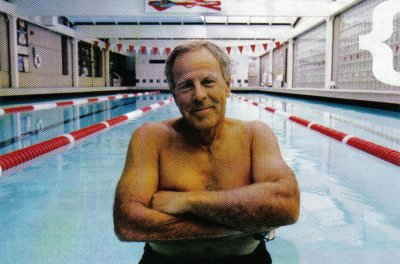
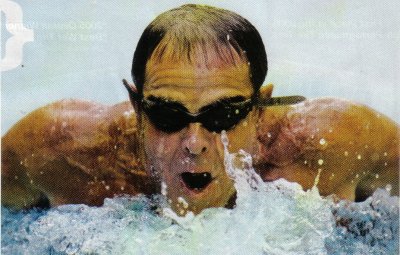
James E. Press is now in his 36th year as a Toyota employee. He's a president and COO of Toyota Motor Sales, USA, Inc. and a member of the company's board of directors, the first non-Japanese in Toyota's history to hold these positions. He spends as much of his time at Toyota's global HQ in Nagoya, Japan, as he does at the company's US base in Torrance, California, and unwinds from the long hours of air travel by pounding up and down a swimming pool most mornings and competing in grueling triathlons when he can.
Press began his automotive career with Ford in the late 1960s. But he's left the traditional Detroit mindset a long way behind. "We're on a mission for a higher purpose." Avuncular and softly spoken, Press leans forward as he speaks, sounding more like a cross between an old-school family physician and a folksy small town pastor on the church steps after a Sunday service than the man runnin the American operation of the world's most relentlessly successful auto business. When asked to explain what he means, he launches into a brief homily: "You go to a construction site, and there are three guys running jackhammers," he says. "You ask the first guy what he's doing and he says: 'What does it look like I'm doing? I'm digging a hole in the cement. Get outta the way.' You ask the second guy and he says: 'I'm putting food on the table for my family. I've gotta have a job, you know.' You ask the third guy and he says: 'I'm building a temple for God.' If you can move your organization to that level, you can accomplish things beyond what you might think."
This sure ain't the sort of stuff they teach in MBA courses. But the more you talk with Jim Press, the more you understand just how radically different Toyota's view of the automotive business world is from that of a Detroit still populated by managers and unions that grew up in an industry riding on easy street, a Detroit now hostage to the sharp-suited money men on Wall St. who see building cars and trucks as nothing more than an inefficient use of capital.
For example, Press tells of attending a global convention for Toyota distributors from around the world where senior executives laid out the company's plans for the future: "In three days of those discussions, the word profit was never mentioned," he says. And while Detroit executives frequently obsess over something they call "shareholder value," that's not a concept that drives the Toyota family, as Press recalls after once congratulating Dr. Shoichiro Toyoda, now honorary chairman of the company, on the strength of Toyota's stock price: "He basically said, 'You know, I don't watch that. I'm not going to sell my stock. And if I I worried about that, the decisions I make wouldn't reflect the fact that my name is on the back of every car.'"
Then there's the issue of executive compensation. Press says senior Toyota execs earn far less than their counterparts at Nissan in Japan, let alone Ford or GM. "We're in it for the good of society," he says with a straight face, before delivering the punch line: "Because that's the way you make money in the long term." Analyze that, Gordon Gekko.
From the outside looking in, Toyota seems to mmake money almost without conscious effort these days. But the company is like a swan: The apparently serene progress is only because there's lots of furious paddling going on under the water. "When a company is doing well, it's rarely as good as what people say," says Press candidly. "And a company that's struggling is rarely as bad as people say." So what keeps Toyota focused? "We may be number four in America, but we think like we're number eight."
Toyota is conservative: "We react to more favorable economic conditions by panicking at how bad it's going to be," says Press with a laugh, though he's only half joking.Rather than ride out the boom-and-bust cycle that Detroit has long assumed to be the norm in the auto business, Press says Toyota takes the view that it would like to grow a little every year - in good years as well as the bad. Toyota also is paranoid: "You've gotta work a lot harder when the target is on your back," says Press. He describes the Korean automakers as "focused, capable, aggressive, hungry" and calls the appearance of three Chinese manufacturers at last year's Frankfurt auto show "the long shot that's going to be heard around the world."
Toyota isn't perfect: "We're criticized by our stockholders in terms of the distribution of our funds and our cash," Press admits. And he believes it's critically importand Toyota quickly becomes a true multinational company rather than a Japanese company that operates globally. "The size of the company requires a self-reliance in geographic markets," he says. "Look at our full-size truck: If you use the thinking in Japan to develop a full-size truck, you get the T100. If you have half Japanese mindset and half American, you get the current Tundra. But if you're 100-percent American, you get the next Tundra."
To be built in a brand-new factory in San Antonio, Texas right in the very heartland of the single-largest full-size pickup truck in the world, the next-generation Tundra, which goes on sale late this year, is a defining vehicle for Toyota in North America, right up ther with the original Corona and Corolla, the Camry, and the Avalon. Press believes the new Tundra will complete Toyota's transformation from pure importer to bona-fide American manufacturer, designing, engineering, and making uniquely American products for the American market.
"The Camry was the first," says Press. "We kind of made that America's car. Then we recognized Camry buyers were moving into larger cars and that there was an opportunity for growth with the Avalon. A large car like that is purely American. It's the Buick alternative. We've figured out how to do that, but the truck is a whole different culture." The key to making it work, says Press, is not to take the values of Japan and impress them on a truck, but to distill the essence of the Toyota DNA and inject it into a new life form. Toyota has ambitious sales targets for the new Tudnra, but these aren't driven by an overt desire for domination, Press insists. "The reason we're doing it isn't to see how many trucks we can sell or to make sure somebody else doesn't sell trucks," he says. After 30 years of building smaller pickups, Toyota estimates 38 percent of those buyers move on to buy a full-size pickup that's not a Toyota. What's more, there are a lot of Camrys sharing garage space with a full-size pickup that's not a Toyota. "It's an opportunity to retain our customers," he says.
Even if Toyota abosultely nails this new Tundra, it's not about to usurp the Ford F-150 or Chevy Silverado or even the Dodge Ram in terms of ourtright sales. The San Antonio plant's maximum capacity is 200,000 units, well shy of the 400,543 Rams, 705,980 Silverados, and 901,463 F-150s sold last year. But any growth of Toyota sales in the full-size sector will eat into the juicy profits Detroit has enjoyed for decades as a resulf of the so-called "chicken tax," the 25-percent duty imposed back in 1963 to prevent imports of a Volkswagen truck and so named because it originated in a dispute with Europe over exports of frozen chicken. With GM and Ford hurting, that's not good news for Motown, and Jim Press knows it.
"We don't want them to have trouble," he insists. "We don't want to score runs on errors." Press believes a stable and healthy GM and FOrd are vital to the health of the U.S. Economy and that, while the U.S. industry is going through an unavoidable - and painful - consolidation process, part of that process will mean Toyota becoming even more deeply enmeshed in the North American automotive landscape. So while GM and Ford race to downsize their manufacturing operations, Toyota is already talking of building more new manufacturing plants on American soild, including one in Michigan. "If other companies are going to be getting smaller, we want somewhere for these folks to go," says Press. "We're not bringing cars and components in from China. We're building in America."
In his quiet way, Jim Press manages to make the auto business sound like a noble calling, rather than some grubby commercial enterprise. The key virtue of building a dependable, reliable, durable car like Camry? "People don't have to worry about their car; they can worry about the really important things like their kids' education." And while other auto industry execs often like to point to sexy new products, bulging corporate bank balances, or gleaming new facilities as their legacy, Press's ambitions are, at first glance, astonishingly modest: "That the company is better off than it would've been if I hadn't been here. And that the people who replace me will kick my ___."
In the world of Toyota, that would be some achievement indeed.
James E. Press is now in his 36th year as a Toyota employee. He's a president and COO of Toyota Motor Sales, USA, Inc. and a member of the company's board of directors, the first non-Japanese in Toyota's history to hold these positions. He spends as much of his time at Toyota's global HQ in Nagoya, Japan, as he does at the company's US base in Torrance, California, and unwinds from the long hours of air travel by pounding up and down a swimming pool most mornings and competing in grueling triathlons when he can.
Press began his automotive career with Ford in the late 1960s. But he's left the traditional Detroit mindset a long way behind. "We're on a mission for a higher purpose." Avuncular and softly spoken, Press leans forward as he speaks, sounding more like a cross between an old-school family physician and a folksy small town pastor on the church steps after a Sunday service than the man runnin the American operation of the world's most relentlessly successful auto business. When asked to explain what he means, he launches into a brief homily: "You go to a construction site, and there are three guys running jackhammers," he says. "You ask the first guy what he's doing and he says: 'What does it look like I'm doing? I'm digging a hole in the cement. Get outta the way.' You ask the second guy and he says: 'I'm putting food on the table for my family. I've gotta have a job, you know.' You ask the third guy and he says: 'I'm building a temple for God.' If you can move your organization to that level, you can accomplish things beyond what you might think."
This sure ain't the sort of stuff they teach in MBA courses. But the more you talk with Jim Press, the more you understand just how radically different Toyota's view of the automotive business world is from that of a Detroit still populated by managers and unions that grew up in an industry riding on easy street, a Detroit now hostage to the sharp-suited money men on Wall St. who see building cars and trucks as nothing more than an inefficient use of capital.
For example, Press tells of attending a global convention for Toyota distributors from around the world where senior executives laid out the company's plans for the future: "In three days of those discussions, the word profit was never mentioned," he says. And while Detroit executives frequently obsess over something they call "shareholder value," that's not a concept that drives the Toyota family, as Press recalls after once congratulating Dr. Shoichiro Toyoda, now honorary chairman of the company, on the strength of Toyota's stock price: "He basically said, 'You know, I don't watch that. I'm not going to sell my stock. And if I I worried about that, the decisions I make wouldn't reflect the fact that my name is on the back of every car.'"
Then there's the issue of executive compensation. Press says senior Toyota execs earn far less than their counterparts at Nissan in Japan, let alone Ford or GM. "We're in it for the good of society," he says with a straight face, before delivering the punch line: "Because that's the way you make money in the long term." Analyze that, Gordon Gekko.
From the outside looking in, Toyota seems to mmake money almost without conscious effort these days. But the company is like a swan: The apparently serene progress is only because there's lots of furious paddling going on under the water. "When a company is doing well, it's rarely as good as what people say," says Press candidly. "And a company that's struggling is rarely as bad as people say." So what keeps Toyota focused? "We may be number four in America, but we think like we're number eight."
Toyota is conservative: "We react to more favorable economic conditions by panicking at how bad it's going to be," says Press with a laugh, though he's only half joking.Rather than ride out the boom-and-bust cycle that Detroit has long assumed to be the norm in the auto business, Press says Toyota takes the view that it would like to grow a little every year - in good years as well as the bad. Toyota also is paranoid: "You've gotta work a lot harder when the target is on your back," says Press. He describes the Korean automakers as "focused, capable, aggressive, hungry" and calls the appearance of three Chinese manufacturers at last year's Frankfurt auto show "the long shot that's going to be heard around the world."
Toyota isn't perfect: "We're criticized by our stockholders in terms of the distribution of our funds and our cash," Press admits. And he believes it's critically importand Toyota quickly becomes a true multinational company rather than a Japanese company that operates globally. "The size of the company requires a self-reliance in geographic markets," he says. "Look at our full-size truck: If you use the thinking in Japan to develop a full-size truck, you get the T100. If you have half Japanese mindset and half American, you get the current Tundra. But if you're 100-percent American, you get the next Tundra."
To be built in a brand-new factory in San Antonio, Texas right in the very heartland of the single-largest full-size pickup truck in the world, the next-generation Tundra, which goes on sale late this year, is a defining vehicle for Toyota in North America, right up ther with the original Corona and Corolla, the Camry, and the Avalon. Press believes the new Tundra will complete Toyota's transformation from pure importer to bona-fide American manufacturer, designing, engineering, and making uniquely American products for the American market.
"The Camry was the first," says Press. "We kind of made that America's car. Then we recognized Camry buyers were moving into larger cars and that there was an opportunity for growth with the Avalon. A large car like that is purely American. It's the Buick alternative. We've figured out how to do that, but the truck is a whole different culture." The key to making it work, says Press, is not to take the values of Japan and impress them on a truck, but to distill the essence of the Toyota DNA and inject it into a new life form. Toyota has ambitious sales targets for the new Tudnra, but these aren't driven by an overt desire for domination, Press insists. "The reason we're doing it isn't to see how many trucks we can sell or to make sure somebody else doesn't sell trucks," he says. After 30 years of building smaller pickups, Toyota estimates 38 percent of those buyers move on to buy a full-size pickup that's not a Toyota. What's more, there are a lot of Camrys sharing garage space with a full-size pickup that's not a Toyota. "It's an opportunity to retain our customers," he says.
Even if Toyota abosultely nails this new Tundra, it's not about to usurp the Ford F-150 or Chevy Silverado or even the Dodge Ram in terms of ourtright sales. The San Antonio plant's maximum capacity is 200,000 units, well shy of the 400,543 Rams, 705,980 Silverados, and 901,463 F-150s sold last year. But any growth of Toyota sales in the full-size sector will eat into the juicy profits Detroit has enjoyed for decades as a resulf of the so-called "chicken tax," the 25-percent duty imposed back in 1963 to prevent imports of a Volkswagen truck and so named because it originated in a dispute with Europe over exports of frozen chicken. With GM and Ford hurting, that's not good news for Motown, and Jim Press knows it.
"We don't want them to have trouble," he insists. "We don't want to score runs on errors." Press believes a stable and healthy GM and FOrd are vital to the health of the U.S. Economy and that, while the U.S. industry is going through an unavoidable - and painful - consolidation process, part of that process will mean Toyota becoming even more deeply enmeshed in the North American automotive landscape. So while GM and Ford race to downsize their manufacturing operations, Toyota is already talking of building more new manufacturing plants on American soild, including one in Michigan. "If other companies are going to be getting smaller, we want somewhere for these folks to go," says Press. "We're not bringing cars and components in from China. We're building in America."
In his quiet way, Jim Press manages to make the auto business sound like a noble calling, rather than some grubby commercial enterprise. The key virtue of building a dependable, reliable, durable car like Camry? "People don't have to worry about their car; they can worry about the really important things like their kids' education." And while other auto industry execs often like to point to sexy new products, bulging corporate bank balances, or gleaming new facilities as their legacy, Press's ambitions are, at first glance, astonishingly modest: "That the company is better off than it would've been if I hadn't been here. And that the people who replace me will kick my ___."
In the world of Toyota, that would be some achievement indeed.

If only American companies (not just automotive) could learn this:
Then there's the issue of executive compensation. Press says senior Toyota execs earn far less than their counterparts at Nissan in Japan, let alone Ford or GM. "We're in it for the good of society," he says with a straight face, before delivering the punch line: "Because that's the way you make money in the long term." Analyze that, Gordon Gekko.


Senior Member
SL Member
Joined: Feb 2006
Posts: 236
Stock incentives offered to American CEO's , CFO's and COO's have made it impossible for most US corporations to maintain a healthy long term focus. US Executives today are more concerned about cashing in than building their company for the future. It weakens more than that individual company, in the end , it weakens the entire country.
No Gordon, Greed is not Good.
No Gordon, Greed is not Good.

Thread
Thread Starter
Forum
Replies
Last Post
ScionLife Editor
Scion News Forum
1
Dec 6, 2014 11:58 PM
ScionLife Editor
Scion iM Discussion Lounge
0
Nov 20, 2014 05:20 PM