


Tata Nano $2500 Car


Thread Starter
Former Sponsor
SL Member
Joined: Aug 2007
Posts: 349
 Tata Nano $2500 Car
Tata unveils Nano, its $2,500 car
Long-awaited Indian 'People's Car' aims to replace the scooter in first-time buyers' hearts. While you won't see it in the West anytime soon, it could signal a wave of lower-priced cars to come.
By MSN Money staff and wire reports
India's Tata Motors today unveiled the Nano, its much-anticipated $2,500 car, an ultra-cheap price tag that brings car ownership into the reach of tens of millions of people.
Company Chairman Ratan Tata, introducing the Nano during India's main auto show in New Delhi, drove onto a stage in a white version of the tiny four-door subcompact, his head nearly touching the roof.
With a snub nose and a sloping roof, the world's cheapest car can hold five people -- if they squeeze. And the basic version is spare: there's no radio, no air bags, no passenger-side mirror and only one windshield wiper. If you want air conditioning to cope with India's brutal summers, you need to get the deluxe version.
At 10 feet long, the Nano is about two feet shorter than a Mini Cooper. Its 623 cubic centimeter two-cylinder engine is estimated to produce about 35 horsepower, good for a top speed of 75 mph.
While the price has created a buzz, critics say the Nano could lead to possibly millions more automobiles hitting already clogged Indian roads, adding to mounting air and noise pollution problems. Others have said Tata (TTM, news, msgs)will have to sacrifice quality and safety standards to meet the target price.
The chairman, though, insists the car will meet safety standards and pollute even less than motorcycles, passing domestic and European emission standards and averaging about 50 miles per gallon.
Chief U.N. climate scientist Rajendra Pachauri, who shared last year's Nobel Peace Prize, said last month that "I am having nightmares" about the prospect of the low-cost car.
"Dr. Pachauri need not have nightmares," Ratan Tata said at the unveiling.
"For us it's a milestone and I hope we can make a contribution to the country."
'A promise is a promise'
The Nano -- its working name was "People's Car" -- is just half the price of the next-cheapest car in the world, a Chery Automobiles QQ3 sold only in its domestic market of China. The $5,200 Suzuki Maruti is the current least expensive option for Indians, where per capita incomes are nearing $1,000 after years of explosive economic growth. In the U.S., the cheapest option is the Chevrolet Aveo at $10,030, four times the price of Nano.
In India, there are fewer than 10 cars for every thousand people, compared with 40 per thousand in China -- and 450 in the U.S. Indians bought about 1 million cars in 2007. Far more middle-class Indians buy and transport their entire families on scooters .
"That's what drove me," founder Ratan Tata writes on the company Web site. "A man on a two-wheeler with a child standing in front, his wife sitting behind, add to that the wet roads -- a family in potential danger."
The basic model will sell for for 100,000 rupees -- $2,500 -- but analysts estimate that customers could pay 20-30% more than that to cover taxes, delivery and other charges.
Tata has long promised that he'd create a 100,000-rupee car, a vow that was much-derided in the global industry but created a frenzy of attention in India. On Thursday, nearly every news station covered the unveiling live.
"A promise is a promise," Tata told the crowd.

Long-awaited Indian 'People's Car' aims to replace the scooter in first-time buyers' hearts. While you won't see it in the West anytime soon, it could signal a wave of lower-priced cars to come.
By MSN Money staff and wire reports
India's Tata Motors today unveiled the Nano, its much-anticipated $2,500 car, an ultra-cheap price tag that brings car ownership into the reach of tens of millions of people.
Company Chairman Ratan Tata, introducing the Nano during India's main auto show in New Delhi, drove onto a stage in a white version of the tiny four-door subcompact, his head nearly touching the roof.
With a snub nose and a sloping roof, the world's cheapest car can hold five people -- if they squeeze. And the basic version is spare: there's no radio, no air bags, no passenger-side mirror and only one windshield wiper. If you want air conditioning to cope with India's brutal summers, you need to get the deluxe version.
At 10 feet long, the Nano is about two feet shorter than a Mini Cooper. Its 623 cubic centimeter two-cylinder engine is estimated to produce about 35 horsepower, good for a top speed of 75 mph.
While the price has created a buzz, critics say the Nano could lead to possibly millions more automobiles hitting already clogged Indian roads, adding to mounting air and noise pollution problems. Others have said Tata (TTM, news, msgs)will have to sacrifice quality and safety standards to meet the target price.
The chairman, though, insists the car will meet safety standards and pollute even less than motorcycles, passing domestic and European emission standards and averaging about 50 miles per gallon.
Chief U.N. climate scientist Rajendra Pachauri, who shared last year's Nobel Peace Prize, said last month that "I am having nightmares" about the prospect of the low-cost car.
"Dr. Pachauri need not have nightmares," Ratan Tata said at the unveiling.
"For us it's a milestone and I hope we can make a contribution to the country."
'A promise is a promise'
The Nano -- its working name was "People's Car" -- is just half the price of the next-cheapest car in the world, a Chery Automobiles QQ3 sold only in its domestic market of China. The $5,200 Suzuki Maruti is the current least expensive option for Indians, where per capita incomes are nearing $1,000 after years of explosive economic growth. In the U.S., the cheapest option is the Chevrolet Aveo at $10,030, four times the price of Nano.
In India, there are fewer than 10 cars for every thousand people, compared with 40 per thousand in China -- and 450 in the U.S. Indians bought about 1 million cars in 2007. Far more middle-class Indians buy and transport their entire families on scooters .
"That's what drove me," founder Ratan Tata writes on the company Web site. "A man on a two-wheeler with a child standing in front, his wife sitting behind, add to that the wet roads -- a family in potential danger."
The basic model will sell for for 100,000 rupees -- $2,500 -- but analysts estimate that customers could pay 20-30% more than that to cover taxes, delivery and other charges.
Tata has long promised that he'd create a 100,000-rupee car, a vow that was much-derided in the global industry but created a frenzy of attention in India. On Thursday, nearly every news station covered the unveiling live.
"A promise is a promise," Tata told the crowd.


Senior Member


SL Member
Joined: Mar 2004
Posts: 533
From: Sacramento, CA
Interesting read. Not bad looking for an uber cheap car. Should be electric tho. Still if its a 4 stroke engine and passes European emission standards thats a hell of a lot better than a 2 stroke scooter engine when it comes to pollution.


Senior Member
SL Member
Joined: Sep 2007
Posts: 419
Here's some pictures I found on the http://www.carmagazine.co.uk/ website.
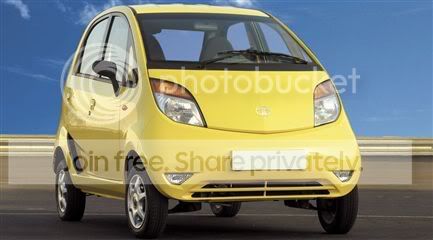
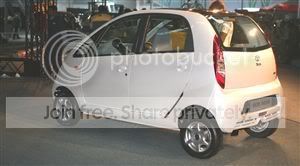
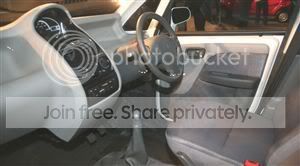
I think that this car is a good thing. I mean as far as cars go, there is obviously way better out there. But for a family that previously could only afford a scooter or motorcycle, this is much safer and convenient transportation. Also, with Euro 3 emissions and 50 MPG, it is cleaner than most motorcycles and second hand cars in the $2500 range. Its pretty impractical for the US, but perfect in many other parts of the world.
I think that this car is a good thing. I mean as far as cars go, there is obviously way better out there. But for a family that previously could only afford a scooter or motorcycle, this is much safer and convenient transportation. Also, with Euro 3 emissions and 50 MPG, it is cleaner than most motorcycles and second hand cars in the $2500 range. Its pretty impractical for the US, but perfect in many other parts of the world.


Thread
Thread Starter
Forum
Replies
Last Post
TheTripleC
PPC: Vehicles
1
Jan 4, 2015 06:46 PM
minter66
PPC: Vehicles
0
Dec 15, 2014 01:45 PM
carid
General Tech and DIY
0
Dec 4, 2014 09:35 AM